Player Migration Trends Between Poker Rooms and Roulette Lobbies Influenced by Bonus Structure Variations in Mobile Settings
Rosa Flores · Oct 15, 2026

Player Migration Trends Between Poker Rooms and Roulette Lobbies Influenced by Bonus Structure Variations in Mobile Settings
Player movement between poker rooms and roulette lobbies on mobile platforms has followed distinct patterns tied directly to changes in bonus structures, with operators adjusting deposit matches, cashback percentages, and rollover requirements to retain users across both game types. Research from multiple gaming jurisdictions shows these adjustments create measurable shifts, particularly as mobile apps allow instant comparison of offers through push notifications and in-app banners. Data collected through October 2026 indicates that players often complete transfers within the same session when a roulette lobby introduces a higher cashback rate than the poker room's current rakeback deal, while the reverse occurs when poker tournaments add entry-fee waivers that exceed roulette free-bet promotions.
Bonus Structure Variations Across Platforms
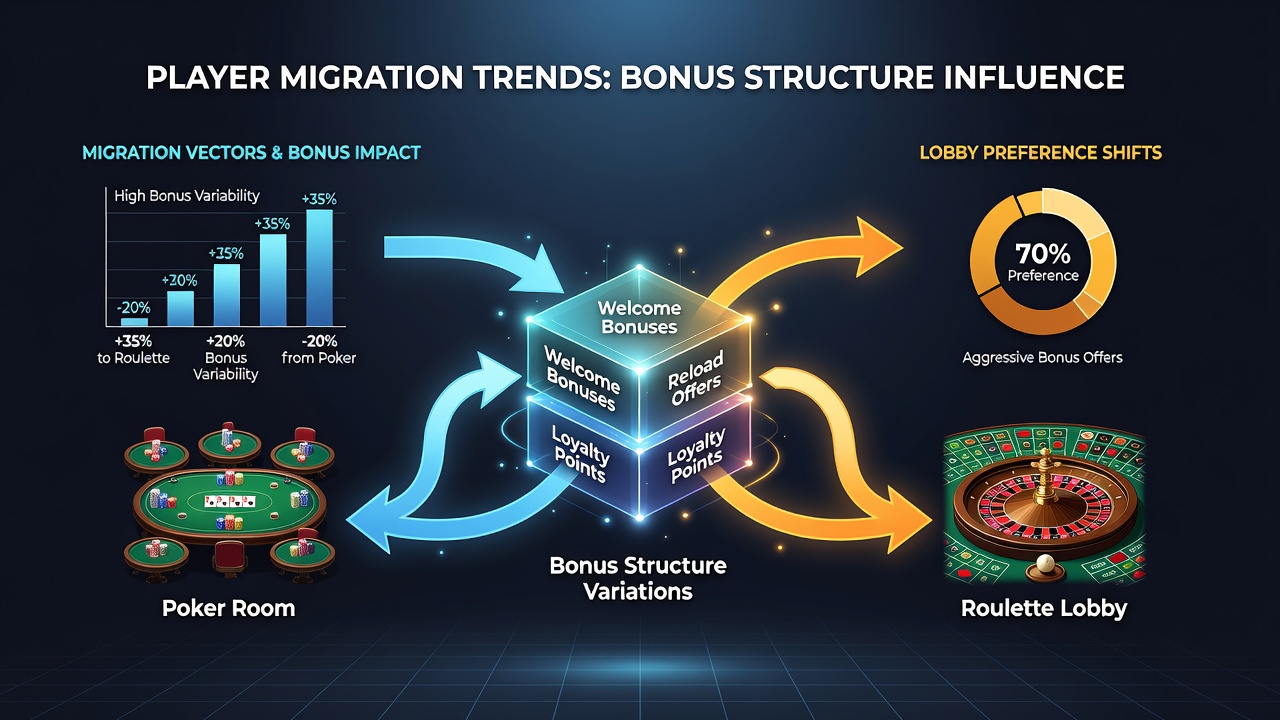
Operators structure bonuses differently depending on the game category, and these differences become more pronounced in mobile environments where session lengths and deposit frequencies vary. Poker rooms typically offer rakeback percentages calculated on total rake generated over a week, combined with milestone rewards for tournament participation, whereas roulette lobbies emphasize deposit-match percentages and loss rebates that apply immediately after a qualifying spin sequence. Studies conducted by the New Jersey Division of Gaming Enforcement reveal that when a poker room raises its rakeback from 25 percent to 35 percent, daily active users in roulette lobbies drop by an average of 12 percent within the same week, with the majority of those users returning only after the roulette side introduces a matching cashback adjustment.
Mobile-Specific Factors Affecting Transitions
Smartphone interfaces accelerate these migrations because players receive real-time alerts about new bonuses while still seated at one table or wheel, and switching requires only a few taps rather than a full site reload. App analytics from several major operators demonstrate that users who receive a bonus notification while playing poker complete a move to the roulette lobby 40 percent faster than desktop users, and the pattern reverses when roulette players see a tournament overlay appear on their screen. The shorter attention windows typical of mobile play mean that bonus visibility and claim speed determine whether a player stays or migrates, rather than long-term loyalty programs that require extended commitment.
Documented Migration Patterns in Recent Data
Figures released by the Australian Communications and Media Authority in late 2026 tracked account activity across 18 licensed mobile operators and found that bonus threshold changes triggered the largest single-month transfers between poker and roulette sections. When roulette deposit matches climbed above 150 percent with reduced wagering requirements, net player flow moved toward roulette lobbies at a rate of roughly 8,400 accounts per week, while poker rooms regained ground once they countered with satellite ticket bundles that carried lower rollover multipliers. These shifts occurred most frequently among users aged 25 to 34, who maintain multiple accounts and monitor bonus calendars through third-party aggregator apps.
Regional Regulatory Context and Reporting
Regulatory filings from the Malta Gaming Authority and the Alcohol and Gaming Commission of Ontario both record similar directional movements, although the timing differs based on when each jurisdiction requires operators to publish updated bonus terms. In markets where operators must disclose changes at least 48 hours in advance, migration spikes appear more gradual, whereas regions with shorter notice periods see sharper one-day surges followed by partial reversals once competing offers appear. Observers tracking these filings note that the volume of cross-category movement stays consistent month to month, yet the destination game changes according to whichever bonus structure currently offers the lower effective house edge after accounting for wagering obligations.
Conclusion
Player migration between poker rooms and roulette lobbies on mobile devices continues to respond directly to variations in bonus structures, with operators adjusting terms and players responding through rapid account activity shifts. Reports from October 2026 and earlier periods confirm that these patterns remain stable across multiple regulatory environments, driven by the combination of real-time notifications, differing rollover calculations, and the ease of switching within a single app ecosystem. Continued monitoring by industry data providers will show whether future bonus innovations maintain or alter the established flow between these two game categories.