How Cross-Border Regulatory Shifts Influence RNG Certification Timelines for Live Dealer Blackjack Variants on Emerging Market Platforms
Ben Butler · Oct 1, 2026
How Cross-Border Regulatory Shifts Influence RNG Certification Timelines for Live Dealer Blackjack Variants on Emerging Market Platforms
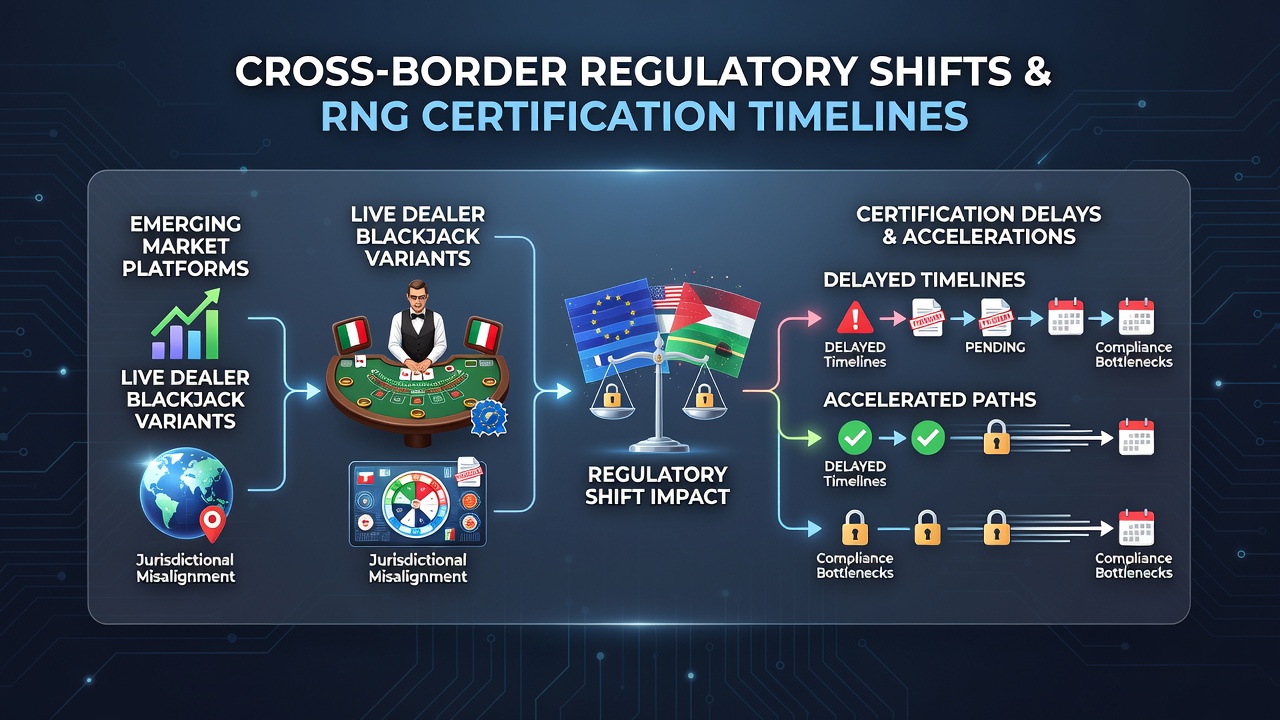
Regulatory frameworks governing random number generator systems continue to evolve across multiple jurisdictions, and these changes directly affect how quickly live dealer blackjack variants receive certification on platforms targeting emerging markets in Latin America, Southeast Asia, and parts of Africa. Operators must navigate differing technical standards, audit requirements, and data residency rules that often conflict when a single RNG engine serves players across several borders at once.
Understanding RNG Certification Basics in Live Dealer Contexts
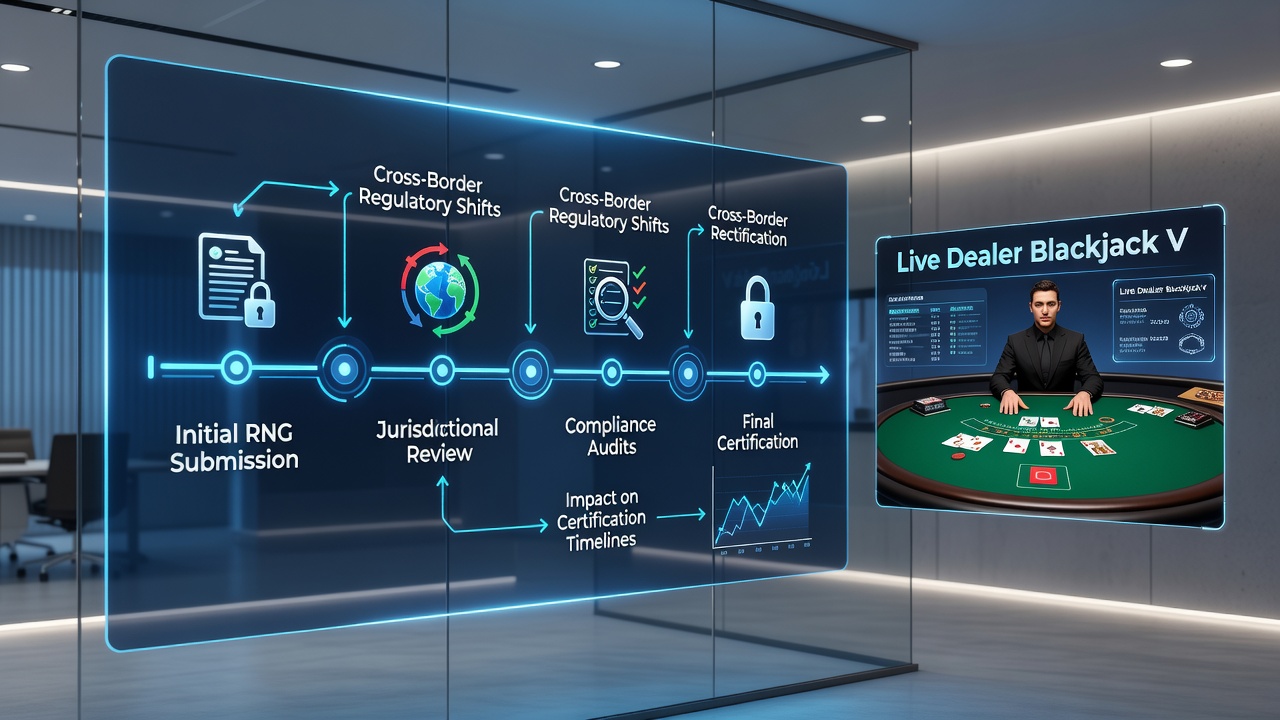
Live dealer blackjack relies on certified RNG modules to shuffle virtual cards and determine outcomes while human dealers interact through streamed video feeds, which means certification bodies examine both the algorithmic integrity and the integration points with streaming software. Emerging market platforms frequently adopt hybrid models where core RNG logic runs in one jurisdiction while user interfaces operate in another, creating additional layers of review that stretch standard timelines from weeks into months.
Key Cross-Border Shifts Observed Through Mid-2026
By October 2026 several regional authorities had introduced updated testing protocols that require independent laboratories to verify RNG performance under simulated high-latency network conditions typical of mobile connections in developing regions. These protocols build on earlier directives from the Alcohol and Gaming Commission of Ontario, which published revised technical standards earlier in the decade emphasizing real-time monitoring capabilities. At the same time, regulators in Colombia and Peru aligned their approval processes with broader Latin American data protection rules, forcing operators to demonstrate that RNG seed generation remains isolated from player data flows crossing national boundaries.
How Timeline Pressures Develop in Practice
Certification queues lengthen when an operator submits an application that covers multiple jurisdictions simultaneously because laboratories must coordinate with each authority's specific checklist, and any single objection triggers a full re-evaluation cycle. One study from the University of Nevada, Reno examined 47 live dealer deployments between 2023 and 2025 and found that platforms operating under three or more regulatory regimes experienced average certification delays of 14 weeks compared with single-jurisdiction launches. The delays arise not only from sequential testing but also from the need to translate documentation and align audit methodologies that use different statistical thresholds for bias detection.
Regional Examples and Coordination Challenges
Platforms entering the Brazilian market after its 2025 federal legalization encountered RNG requirements that reference ISO/IEC 17025 laboratory accreditation while also demanding local data residency for seed storage, a combination that extends review periods because few accredited labs maintain facilities inside the country. Similar patterns appear in Vietnam where draft circulars issued in early 2026 require RNG outputs to undergo continuous statistical sampling by a government-approved institute, adding another verification step after initial certification completes. Observers note that these layered demands often push total timelines past the 90-day mark even when the underlying technology has already passed equivalent tests elsewhere.
Technical Adaptations Operators Implement
Companies respond by modularizing their RNG architecture so that jurisdiction-specific modules can be swapped without re-certifying the entire system, yet this approach still requires fresh validation of integration points each time a new regulatory update appears. Data from industry reports compiled by the International Association of Gaming Regulators indicate that operators using containerized RNG services reduced average recertification time by 22 percent in markets that adopted the October 2026 latency simulation requirements, largely because test environments could be replicated quickly across borders. The approach works best when the core algorithm remains unchanged and only the deployment configuration varies.
Conclusion
Cross-border regulatory shifts continue to reshape RNG certification timelines for live dealer blackjack on emerging market platforms through added testing layers, data localization mandates, and coordination overhead among authorities. Platforms that maintain flexible architectures and maintain relationships with laboratories accredited in multiple regions tend to absorb these changes with smaller disruptions, while those relying on monolithic systems face repeated delays. As more jurisdictions finalize rules aligned with the October 2026 updates, the pattern of extended but predictable certification cycles appears likely to persist.