Demographic Influences on Preference Shifts Between Table Games and Reel-Based Entertainment in App-Based Casino Offerings
Frankie Schwarz · Oct 29, 2026
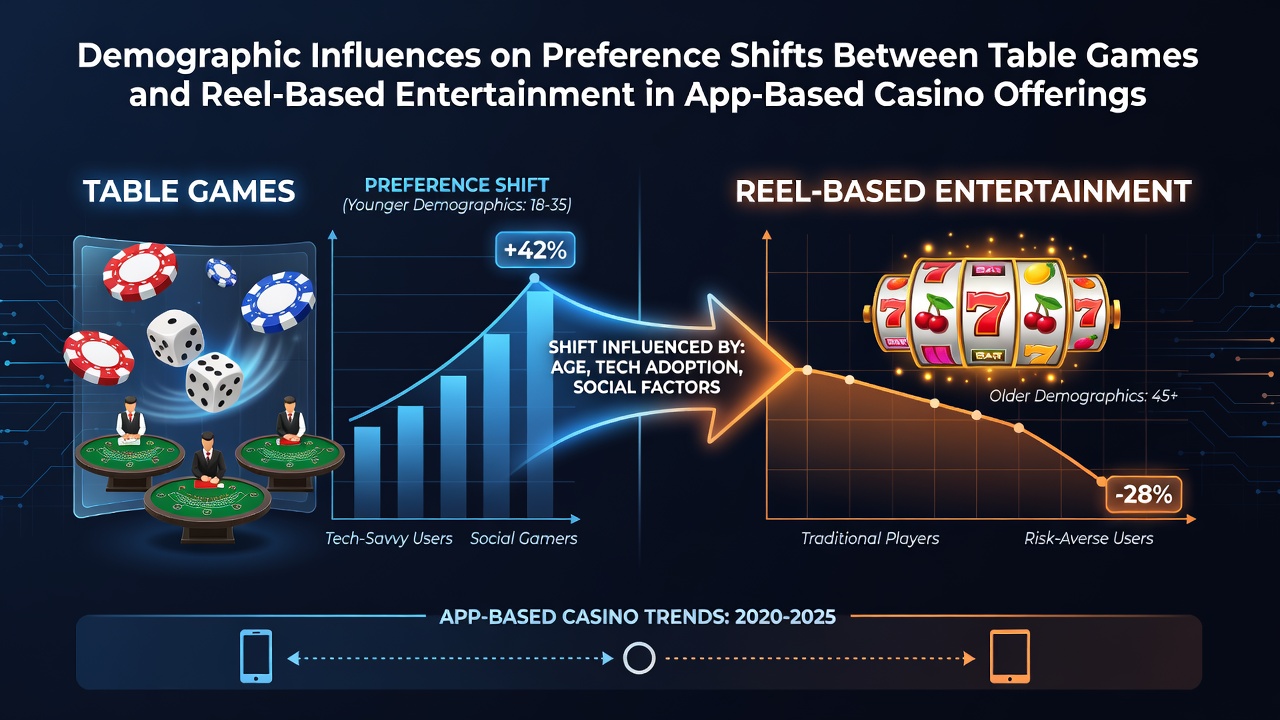
Demographic Influences on Preference Shifts Between Table Games and Reel-Based Entertainment in App-Based Casino Offerings
App-based casino platforms continue to record measurable shifts in user selections between table games such as blackjack and poker and reel-based entertainment like video slots, and these patterns align closely with demographic variables tracked across multiple markets. Researchers analyzing player data from 2024 through late 2026 have identified consistent correlations between age brackets, income tiers, and geographic locations and the types of games chosen on mobile devices. In October 2026 several industry reports highlighted how these variables interact with interface design and bonus structures to influence session lengths and game-type transitions.
Age-Based Patterns in Game Selection
Younger users aged 18 to 34 demonstrate higher engagement with reel-based titles during initial app sessions, while those aged 35 to 54 show steadier movement toward table-game variants once they accumulate playtime credits. Data collected by platform operators indicates that users under 30 complete an average of 42 percent more reel spins per session than table-hand equivalents, whereas the 40-plus cohort initiates 28 percent more blackjack or poker rounds after the first week of activity. Observers note that these preferences hold across both iOS and Android environments, although the gap narrows slightly when progressive jackpot reels are paired with social-leaderboard features.
Income and Spending Correlations
Income levels further segment preferences in ways that affect how quickly players migrate between game categories. Individuals reporting household incomes above the regional median allocate more session time to table games once weekly deposits exceed a documented threshold, according to aggregated transaction records examined by market analysts. Lower-income cohorts maintain higher reel engagement even after similar deposit volumes, often citing shorter decision cycles and clearer visual feedback as factors. One multi-platform study covering North American and Australian users found that the income variable predicts roughly 19 percent of the variance in table-to-reel transition rates when controlling for age.
Geographic and Regulatory Context
Regional regulatory frameworks also shape observed shifts. Platforms operating under the Nevada Gaming Control Board guidelines report different transition speeds compared with those licensed in Australian states, where reel content faces stricter advertising rules. In markets with recent tax adjustments on mobile betting turnover, table-game lobbies have recorded increased traffic from users previously concentrated in reel sections. The American Gaming Association state-of-the-states summary released in 2026 documented these geographic variances without attributing causation to any single policy change.
Gender distributions add another layer. Female users across tracked cohorts initiate reel sessions at higher rates in the first month, yet male users show faster uptake of live-dealer table options once tutorial prompts appear in-app. Platform telemetry from October 2026 indicated that mixed-gender households using shared devices exhibit hybrid patterns, alternating between categories within the same evening.
Interface and Bonus Mechanics as Mediators
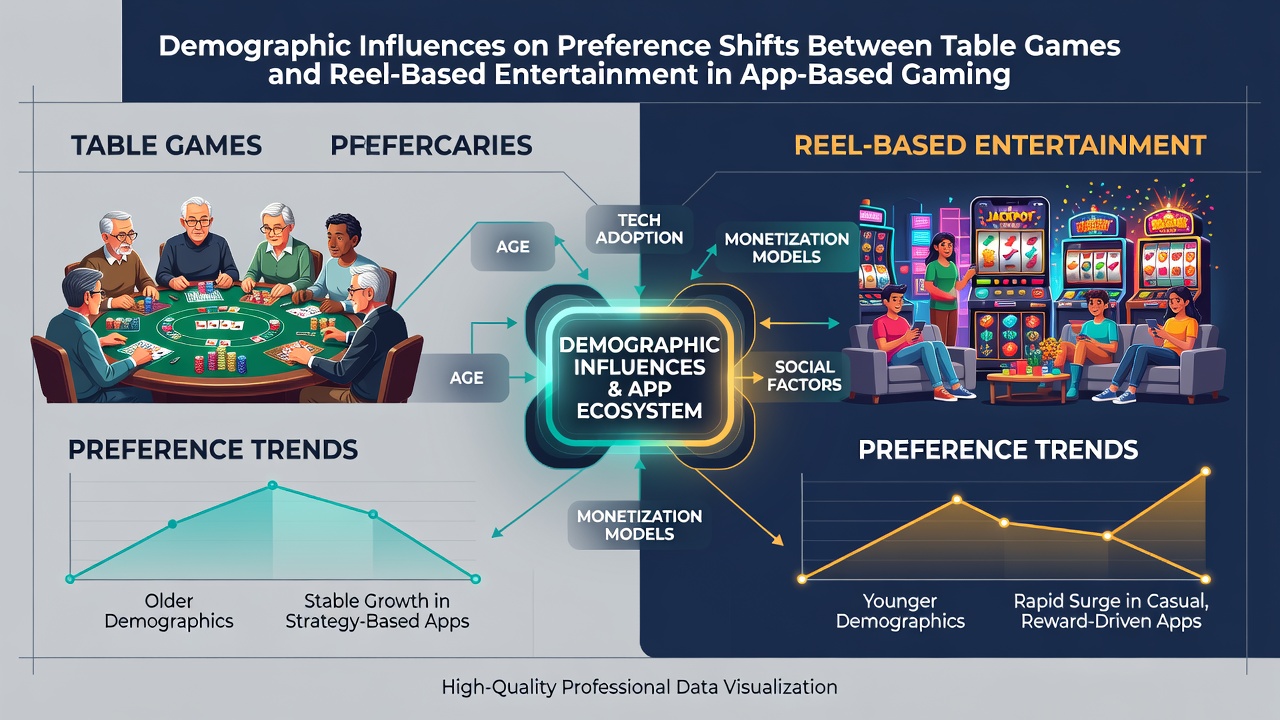
App design elements interact with demographic traits to accelerate or slow preference changes. Reel games featuring frequent small-win animations retain younger users longer, whereas table interfaces with customizable betting limits retain older cohorts through extended sessions. Bonus rollover requirements tied to specific game types produce measurable migration effects: when operators link free-spin offers exclusively to reels, table-game participation drops temporarily before rebounding once the requirement is satisfied. Researchers tracking these mechanics across several hundred thousand accounts have quantified that the effect size remains modest yet consistent within each age and income segment.
Emerging Data from Late 2026
October 2026 figures from cross-border operators revealed that users who began on reel titles in the prior quarter transitioned to table games at rates 11 percent higher than the same period in 2025, with the increase concentrated among 30-to-44-year-olds in mid-income brackets. Educational content delivered inside the app, such as rule summaries for blackjack variants, correlated with faster shifts in those same groups. Platform logs also showed that device screen size influences retention, with larger tablets recording longer table-game sessions across all demographics examined.
Conclusion
Demographic variables continue to map onto observable differences in how users navigate between table and reel content on app-based casino platforms. Age, income, gender, and location each contribute measurable portions of the recorded variance, while interface features and bonus structures serve as additional moderators. Continued monitoring of these patterns through 2027 will clarify whether the October 2026 trends represent sustained movement or temporary fluctuations tied to seasonal promotions and regulatory updates.